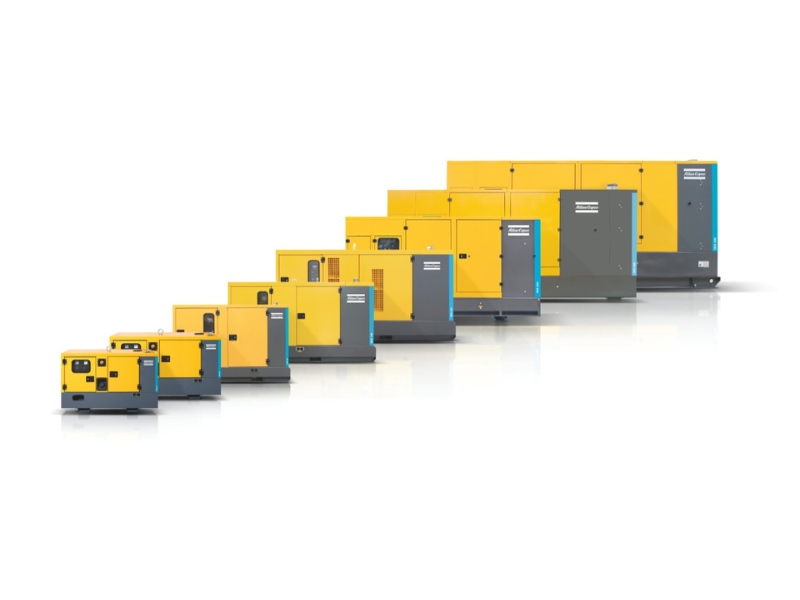
Professional power generators with the right kW and kVA capacity for your application
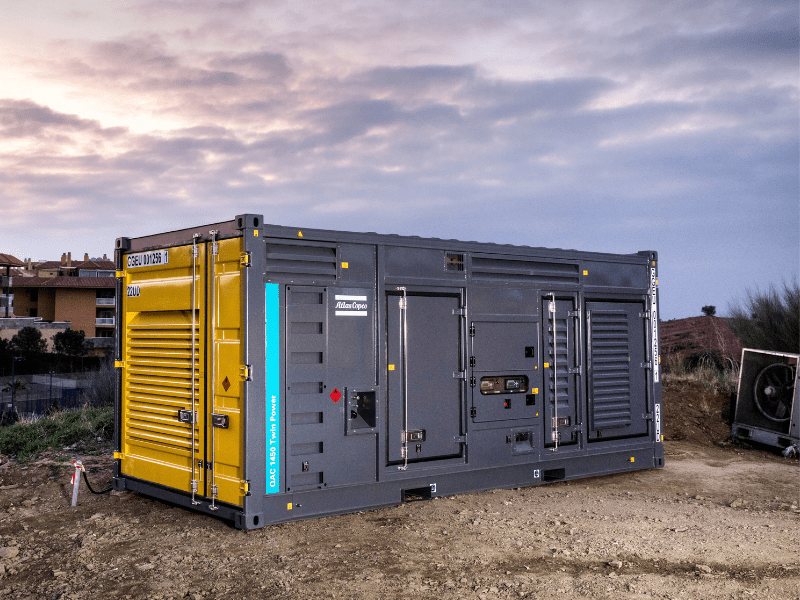
A professional power generator must provide stable power under real operating conditions, not based on theoretical assumptions. Choosing generator power correctly requires an understanding of kW, kVA, power factor (power factor, cos φ), starting currents and safety margins. Fimatec supports construction companies, industrial players and event professionals with correctly dimensioned power generators that ensure continuity, efficiency and long-term reliability.
Why proper generator power is critical
An undersized power generator causes voltage drops, unexpected downtime and accelerated wear of connected equipment. An oversized generator leads to higher investment costs, unnecessary fuel consumption and inefficient operation. Correct power selection ensures:
- Stable voltage under varying loads
- Safe operation of engines and electronic equipment
- Optimal fuel consumption
- Long service life of the power generator
Choosing the right generator power therefore remains a technical decision, not a catalog exercise.
Understanding the difference between kW and kVA
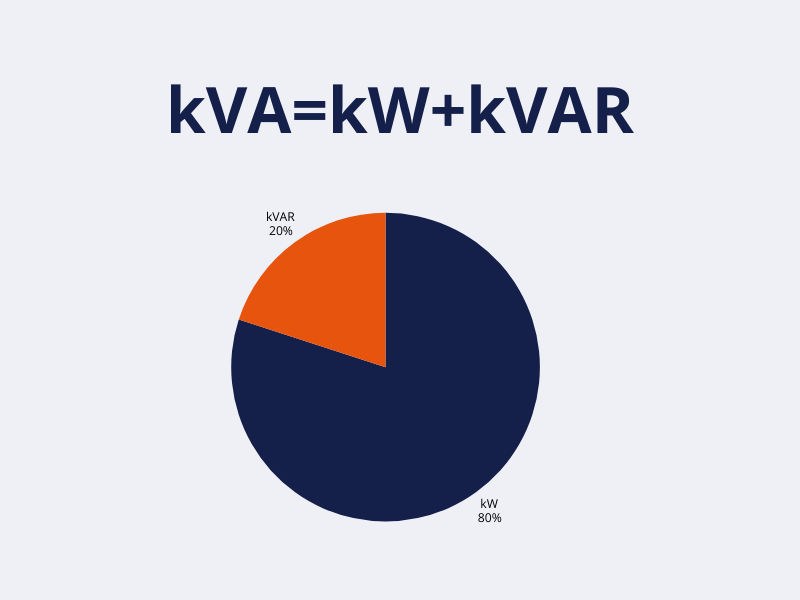
One of the most common mistakes made when choosing a power generator is the confusion between kilowatts and kilovolt amps.
kW: active power
Kilowatt (kW) represents the real power consumed by electrical devices to perform effective work, such as driving motors, powering lights or generating heat. This power is converted into mechanical energy or heat.
kVA: apparent power
Kilovolt amperes (kVA) represent the total power that a power generator must deliver. This includes both active power and reactive power generated by inductive and capacitive loads such as motors, compressors and transformers, typically present in yards and industrial environments.
The role of the power factor (power factor, cos φ)
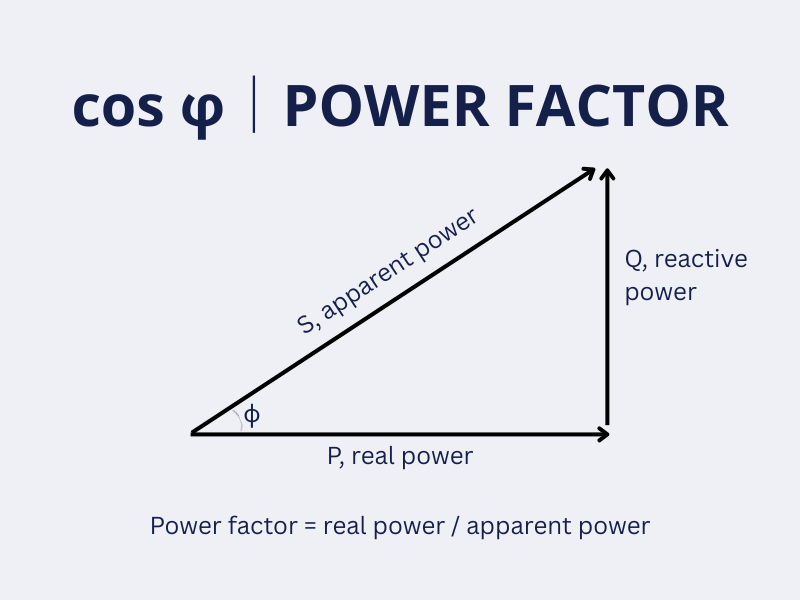
The difference between kW and kVA is determined by the power factor (power factor, cos φ):
kVA = kW / power factor (power factor, cos φ).
In real applications, the power factor (power factor, cos φ) rarely reaches a value of 1. In most building and industrial applications, it is around 0.8.
Example
- Active power: 10 kW
- Power factor (cos φ): 0.8
- Required apparent power: 12.5 kVA
This explains why two power generators with the same kVA rating can provide different usable power depending on the nature of the load.
Step-by-step plan for choosing generator power correctly
Step 1: determine the total power consumption
Map all appliances and machines that will be connected to the power generator and determine their active power in kW. Pay special attention to motors, compressors and machines with variable speed drives, as they greatly affect apparent power.
Step 2: Convert kW to kVA
Use the formula:
kVA = kW / cos φ
For professional applications, a conservative power factor (power factor, cos φ) of 0.8 is a realistic starting point.
Step 3: add a safety margin
A safety margin of 25 to 50 percent ensures stable operation at peak load and prevents generator overload.
Example
- Calculated power: 12.5 kVA
- Safety factor: 1.25
- Minimum required generator power: 15.6 kVA
Step 4: Consider starting currents
Many machines require two to three times their rated power at startup. The power generator must be able to handle these short peak currents without voltage drop or shutdown.
Step 5: choose the right power generator
Select a power generator that meets or slightly exceeds the calculated continuous power, apparent power and peak power at a minimum to ensure stable operation.
Why professional power generators are specified in kVA
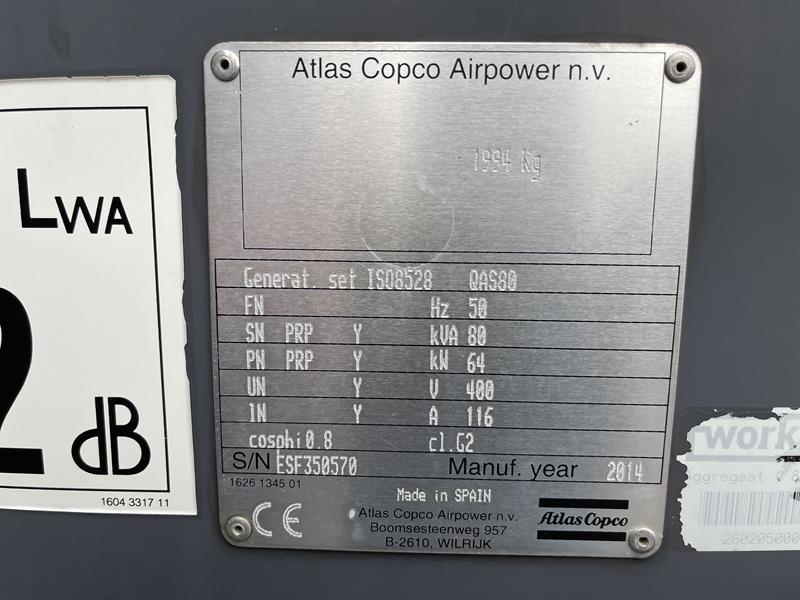
Professional diesel power generators are specified in kVA because their design limits are determined by current rating and thermal load, not just usable power. This method of specification ensures that the generator handles varying loads, inductive loads and starting peaks without problems.
Important selection criteria besides power
Fuel type and efficiency
Diesel power generators set the standard for construction and industrial applications thanks to their fuel efficiency, robustness and long service life.
Noise level and working environment
Urban construction sites and indoor installations require low-noise power generators with acoustic enclosures that meet local noise standards.
Mobility and installation
Mobile power generators on skid or trailer enable rapid deployment, while fixed installations are suitable for permanent or critical power supply.
Emissions and future-proofing.
Stage V-compliant power generators and hybrid solutions with battery storage lower emissions, reduce fuel consumption and reduce noise.
Service, availability and operational reliability
Reliable power supply requires more than just correct dimensioning. Fimatec supports customers with its own service team, quick interventions, replacement equipment from the rental fleet and a large stock for immediate deployment.
Expert advice for correct generator selection
Every application has specific requirements. Fimatec calculates power solutions based on real load profiles, operational constraints and future expansion possibilities, not on theoretical assumptions.
- Get technical advice for correctly sizing your professional power generator
- Receive a customized quote for a diesel power generator
- Discuss temporary, permanent or hybrid power solutions with our specialists